Future
We saw the performances of the prototype previously but it is only a prototype !
It is far from representing all the potential of this invention. This is the reason why we will see here, in which forms it will be able
to take life, and which are the improvements compared to the prototype.
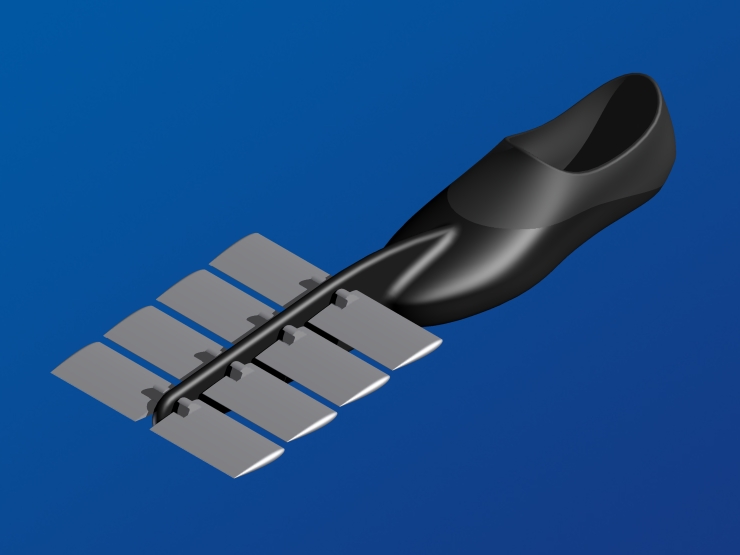
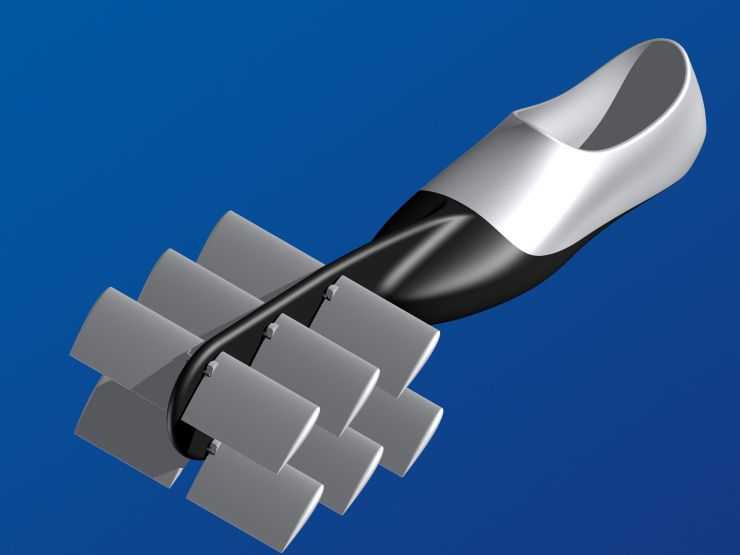
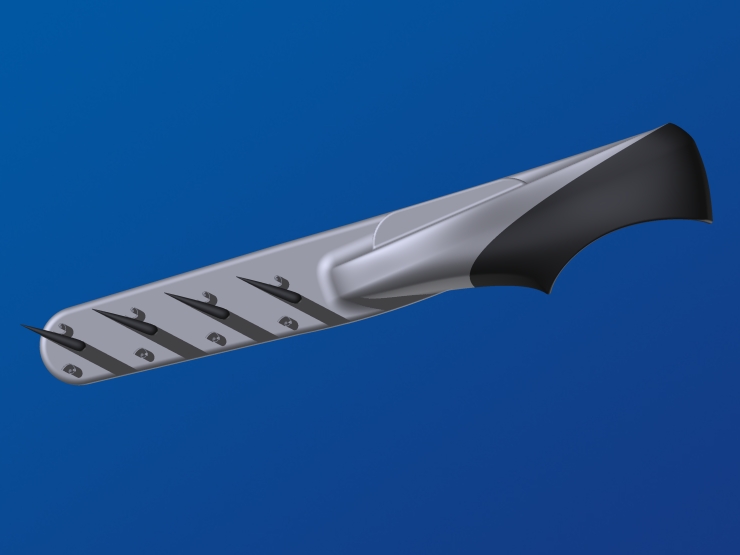
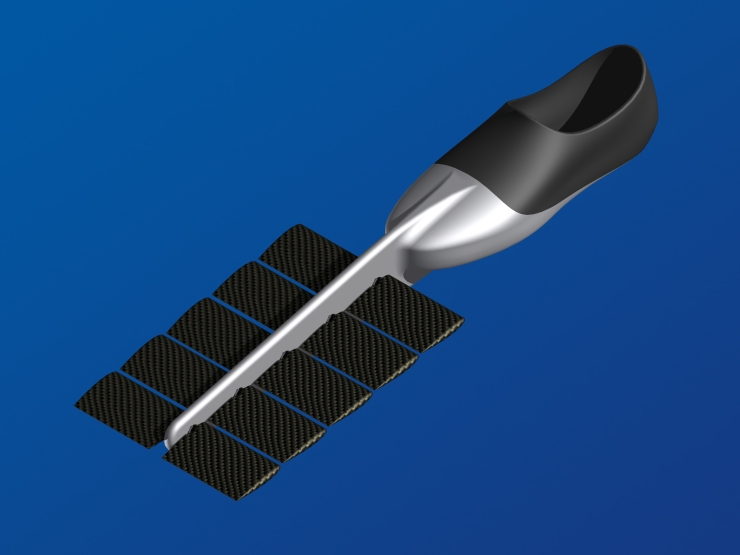
The "sport" version :
It is a version made for the performances.

 Click on it to enlarge.
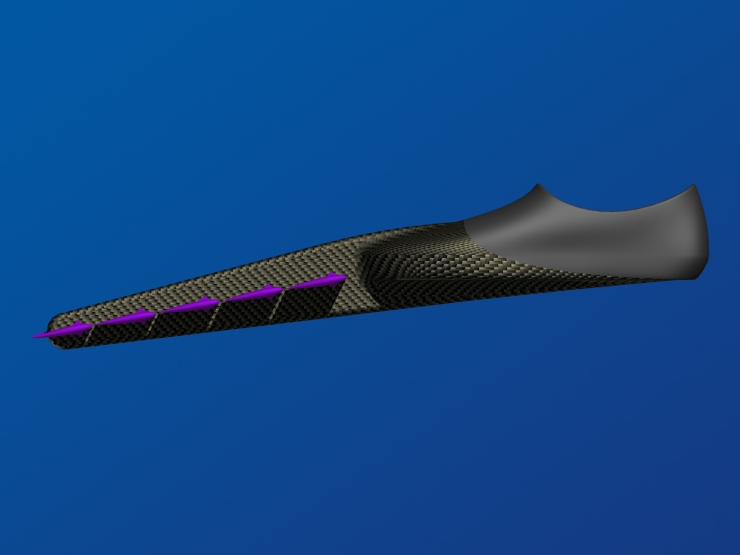
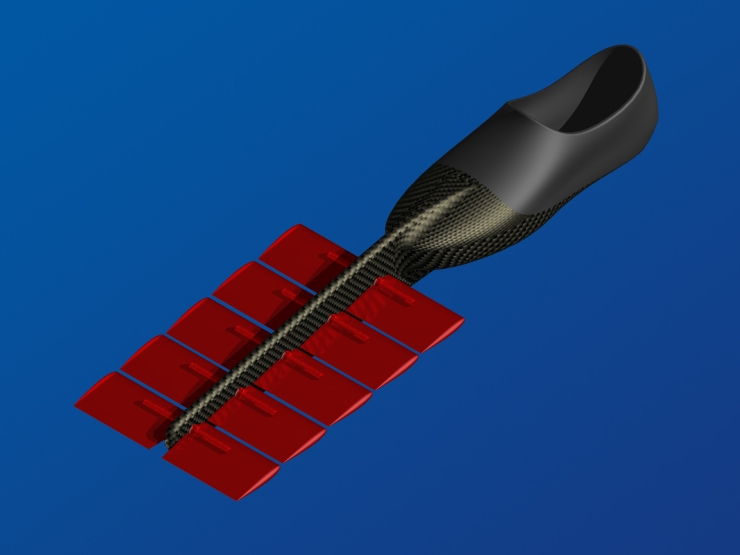
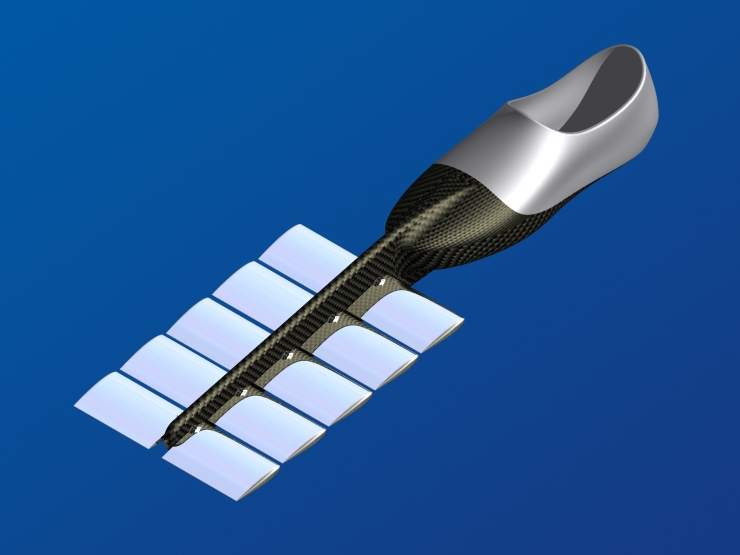
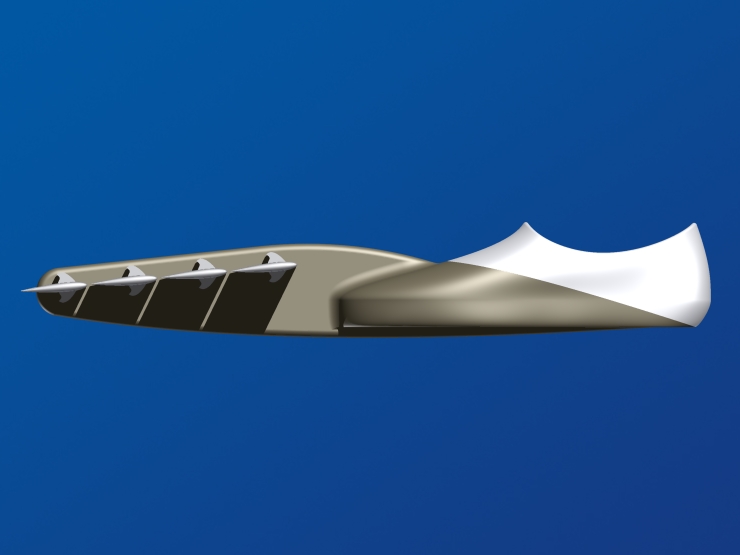
It has 5 wings of 50mm of cord (3 of 76mm for the prototype), which makes it longer of 3cm.
These shorter wings allow a faster change of slope between the rise phase and the descent one.
That also makes it possible to decrease resistance (we needs less force to make them swivel) and inertia
(they are put more quickly in the good position after their half-turn).
All that generates more output.
The slipper is better shaped than the prototype one. That makes it possible to generate less turbulences, especially for the first two pairs of wings,
and makes it more efficient.
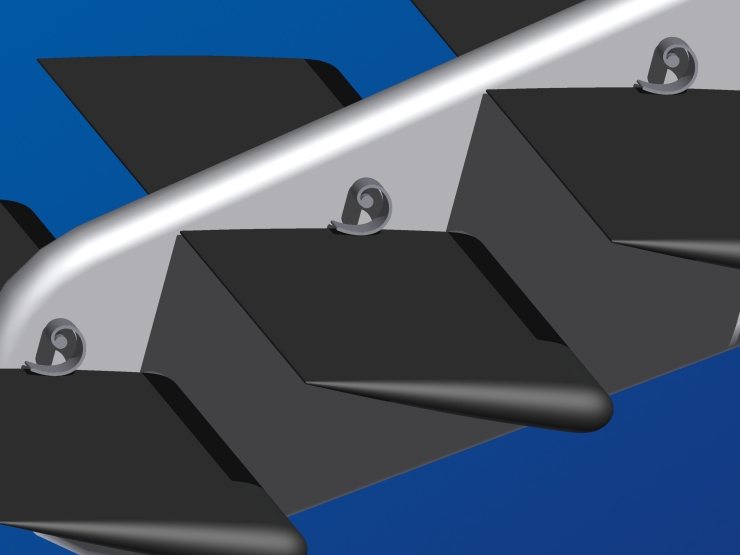
The axes are fixed on the wings very slightly behind center of pressure. That enables it to be even more efficient, in particular at full speed.
Its wing profile is more powerful than the one of the prototype. A lot of wing profiles exist, there is inevitably a
better adapted profile than NACA00xx. Moreover, it is possible to use asymmetrical profiles for better adapting to the physiology of the swimmer.
It results from this a better performance and more comfort.
It should be less heavy than the prototype, especially in apparent weight. What involves an improvement of comfort at lower speed.
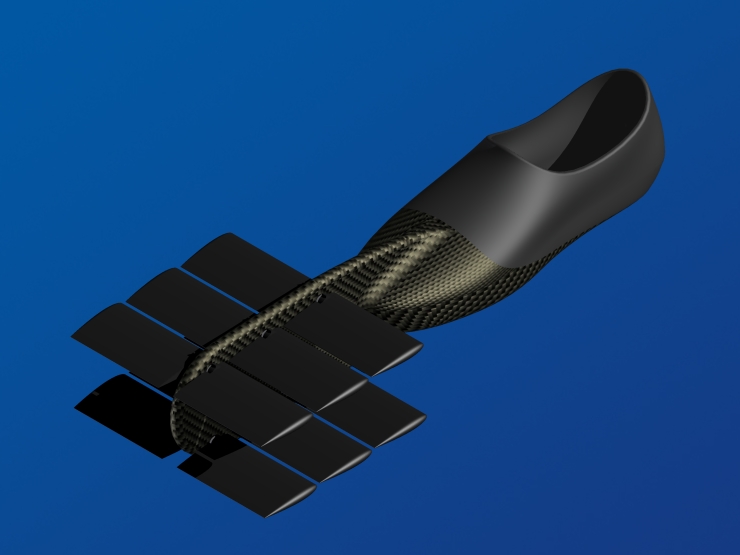
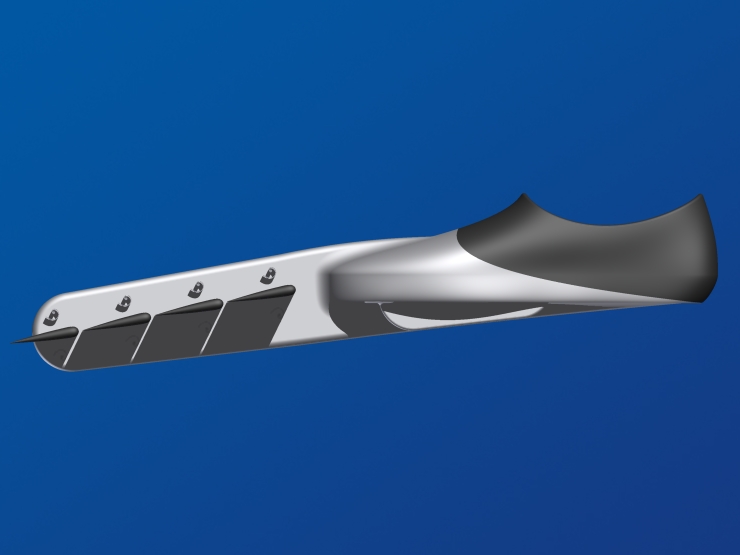
The "fun" version :
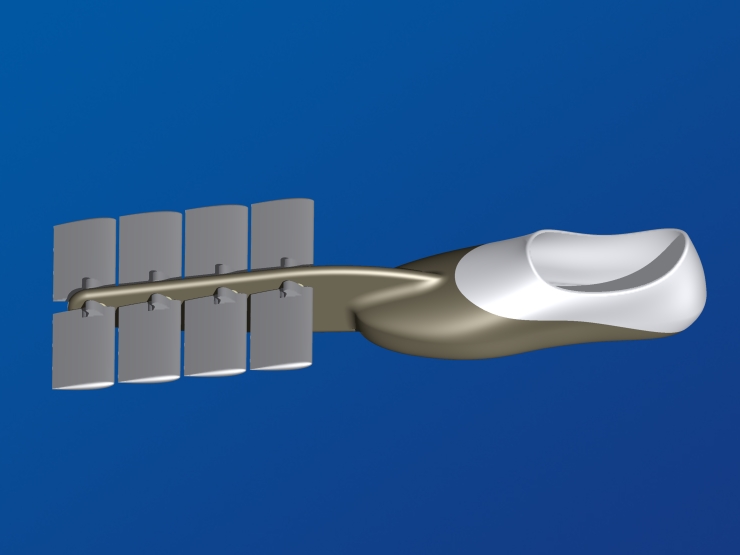
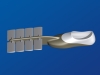
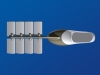
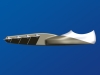
It is a more robust version and a better adapted one to a daily use.

 Click on it to enlarge.
The thrust system prevents the wings from being inclined with more than 45 degrees. Thus, at low speed or "on the spot", the swimmer has an
additional support allowing him to evolve more easily.
A piece of foam placed on the zone of support is used then as shock absorber.
This sope limitation makes it possible to prevent that the foot goes too ahead. Supporting a more profitable movement of finning.
Contrary to the prototype, the serie of wings is placed at the top of the foot. The goal being to offer a maximum of push
when the swimmer is on the surface, in particular when there are waves. That also allows to kick the wall of the swimming pool
for the half-turn, without damaging the wings.
The body is higher to improve side displacements.
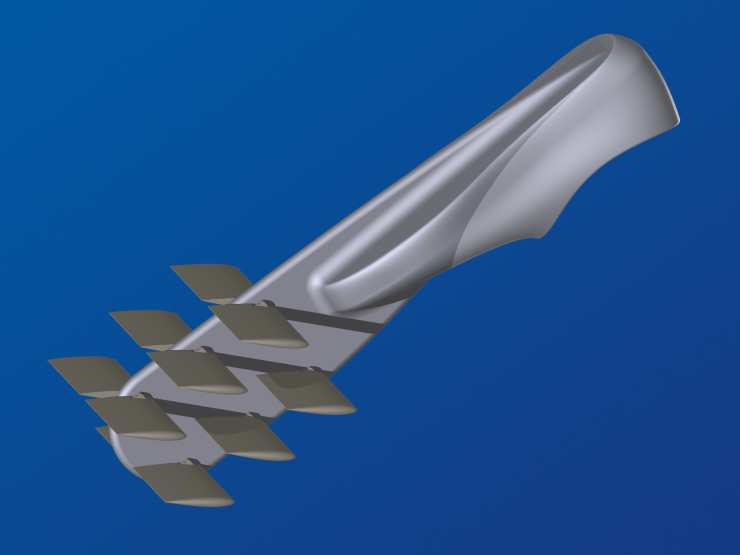
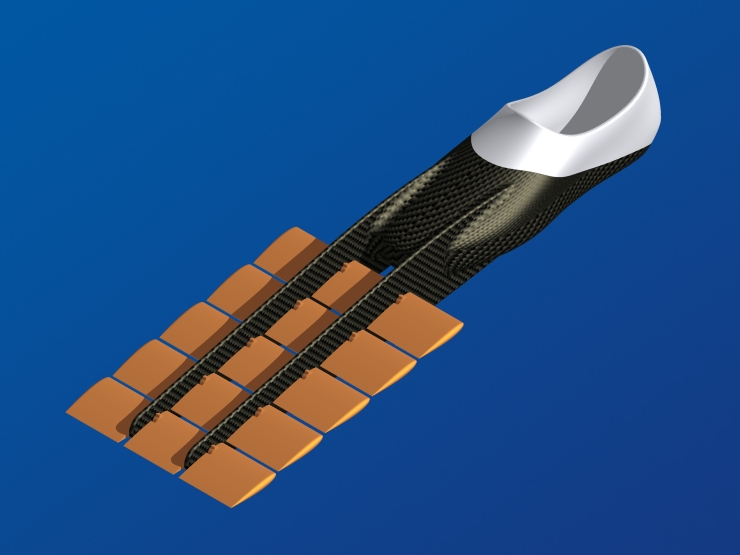
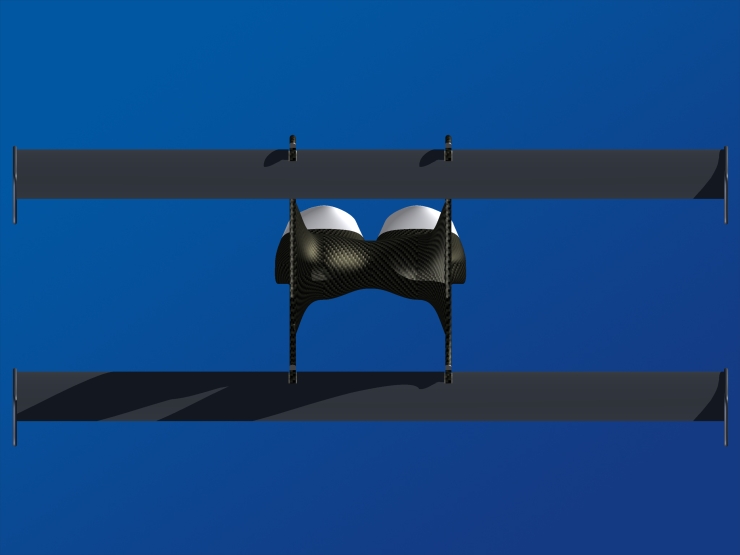
The "Biplan" version :
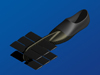
It uses more the zone close to the foot (more profitable mechanically).


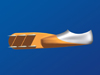

 Click on to enlarge.
Contrary to the prototype, the wings are not placed in stagged rows and are more distant ones to each others. If that is enough to limit
the interactions, that should be the most profitable of all.
Its very high body facilitates even more side moving.
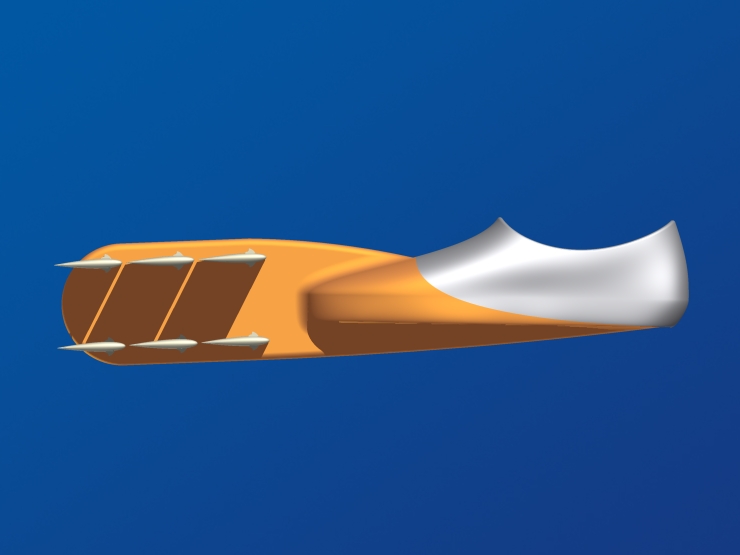
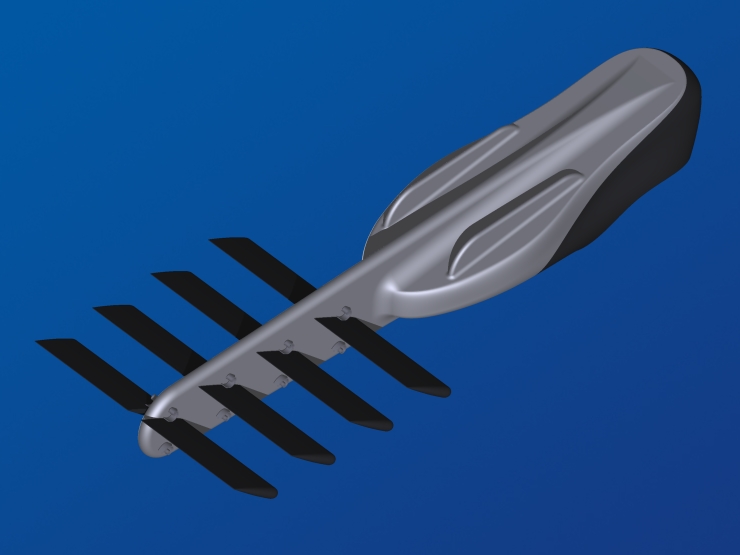
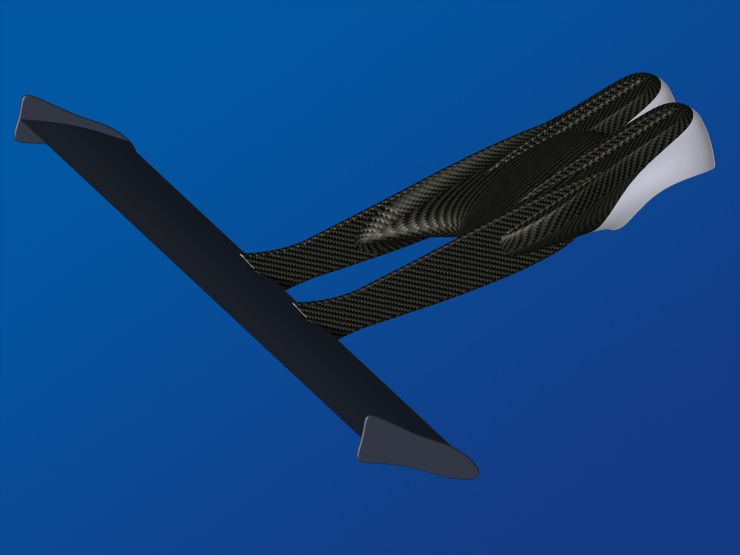
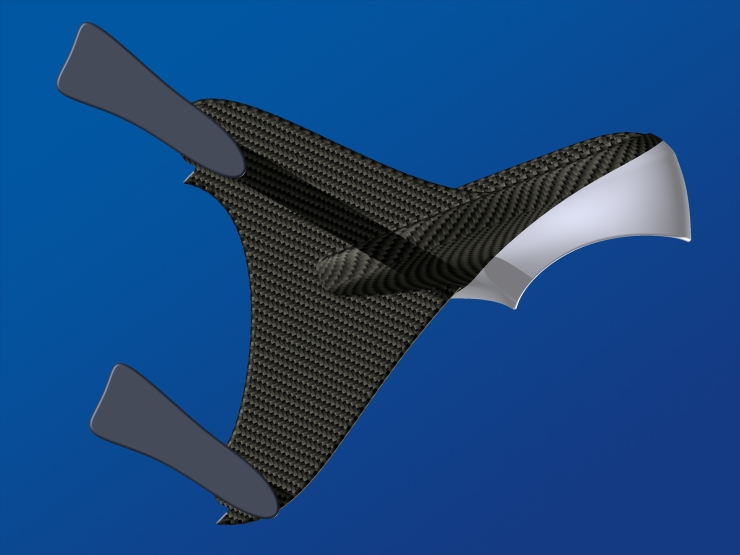
The "Max" version :
Probably the most adapted version to the competition.
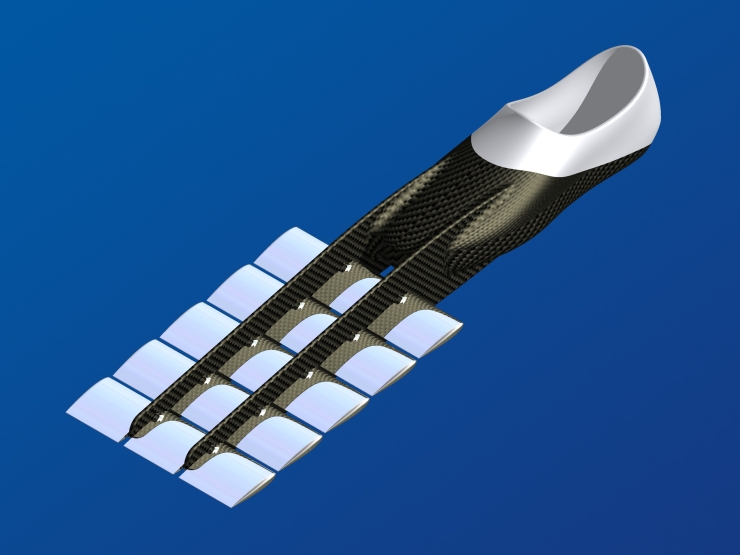


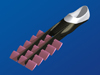 Click on it to enlarge.
The body is made of two branchs between which a third wing is placed. That makes it possible to decrease the overhanging of the wings. It is thus
possible to use shorter wings (length of cord) and thinner ones.
This method could also be advantageously used for the "Fun" version. That would make it possible to gain robustness and stability
when the swimmer walks with his fins to the feet.
The version "Plongée" :
For a basic use in diving.
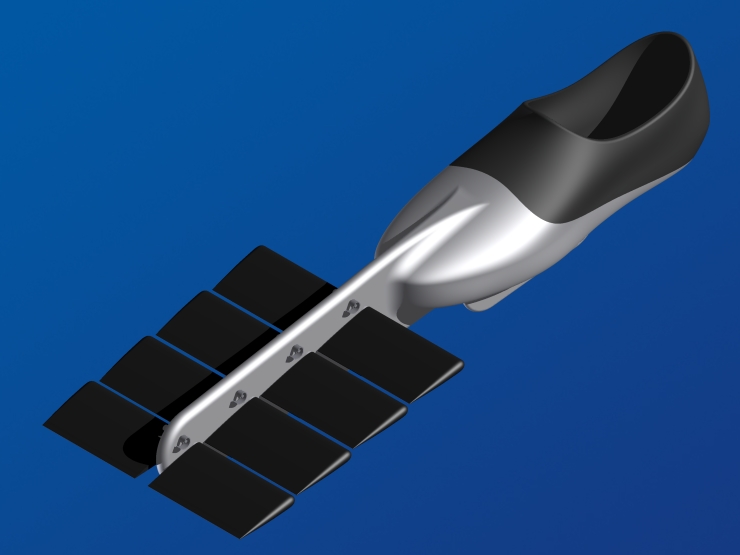

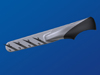
 Click on it to enlarge.
In a first version, its outline would look like the drawing above. Its characteristic being that wings, fixed just behind center of pressure on
other models, would be there fixed more behind this center. That would allow a slow and large movement of finning,
like most of divers practice.
In a second version, represented on the drawing above, the principle of the wing of plane is not used. The positioning of
wings is fixed at 45° by the thrusts. The resultant of the forces is thus always optimal for advance. That authorizes a movement of finning
large and irregular.
The wings are attached to the axes, not behind the center of pressure, but as nearest as possible to the leading edge (front part). There is thus
very little force dissipated in the shift phase.
The body is high and tilted towards the heel so that the succession of wings evolves in a symmetrical way in the two phases of the finning (up and down).
The thrusts are small shock absorbers in spiral but that could as well be a simple foam disc. The aim being to limit the jolts.
Two stabilizers, placed on both sides of body, make it possible to the user to walk with the fin to the foot.
Advantageously, it would be possible to reduce the angle of evolution of the wings close to the foot. In order to as well as possible exploit
the mechanical profitability of this zone.
The version "Mono" :
Probably the only version which can claim to be homologé for certain competitions.
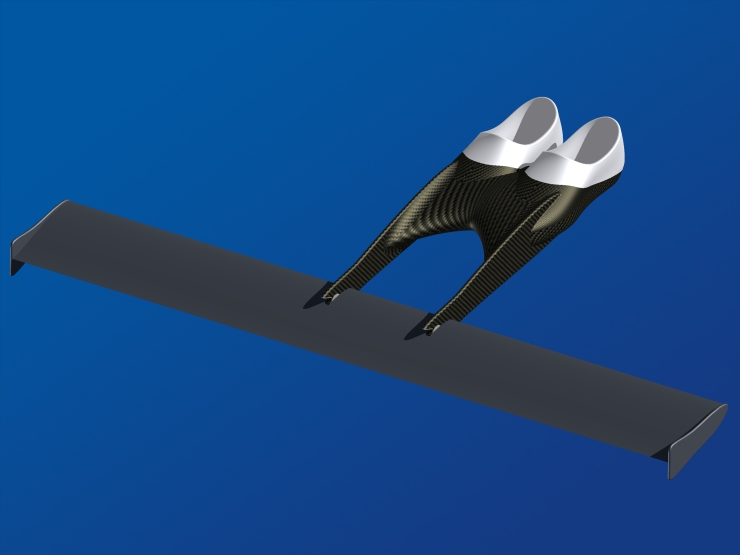
 Click on it to enlarge.
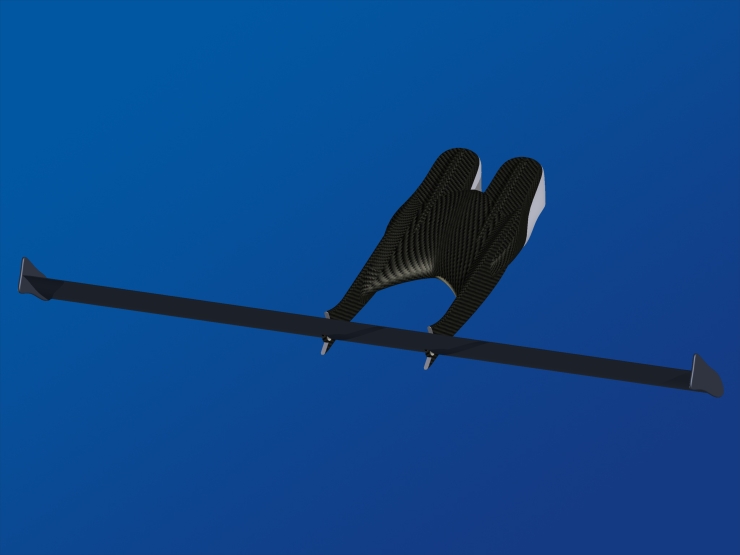
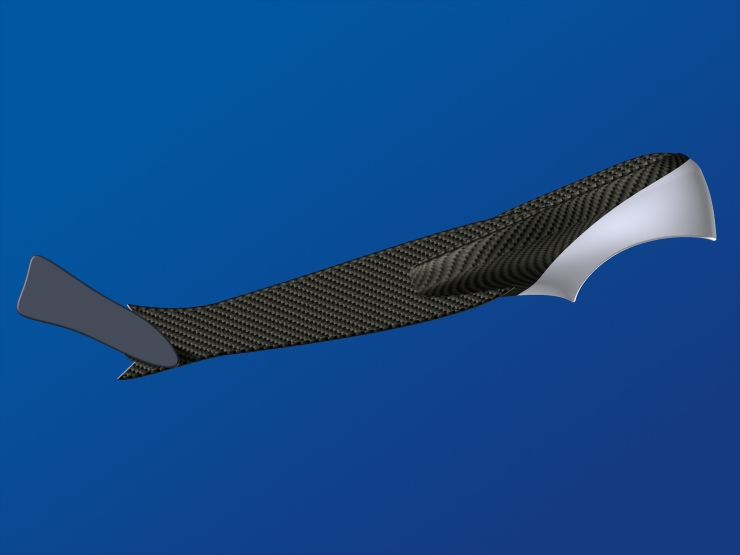
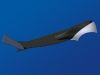
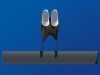
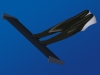
Here, there is only one propellent element. The body can thus stop can after the axis of rotation. That makes it possible to solidarize the three wings and to thus gain in rigidity and solidity.
To adapt the fin to the power of the swimmer, it is necessary to exploit the span of the wing, its length of cord and its distance of the foot.
Indeed, the length is limited mainly by the resistance and the rigidity of materials, and the length of cord owes beings small. If surface thus obtained is not
sufficient, as on the drawing above, it is then necessary to move away the wing from the end of the foot in order to create boom.
The thrusts make it possible the wing not to exceed a slope of approximately 50° on each sides. This so that it is always close to its position of minimum operation,
for example, at the time of the half-turn in swimming pool.
Wing profiles is asymmetrical in order to benefit from the strong power available at the time of the downward phase. Conversely, that makes it possible to relieve
the phase of gone up for replacement the faster.
Ailerons in dout of wing limits the induced trail and takes part in the rigidity of profiles.
The version "BiMono" :
The most powerful ?
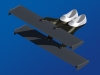

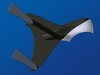
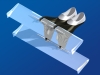 Click on it to enlarge.
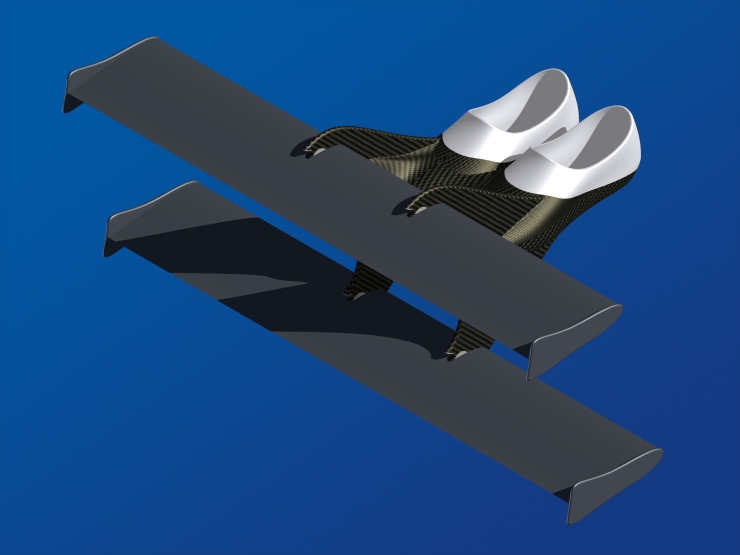
The two wings are clearly spaced so that they influences the least possible. This characteristic returns certainly the fin very can powerful surfaces some because
there are strong chances that the wing superior left water.
To gain in rigidity, it is possible to connect the ends of wings by a part fixed at the level of their axis of rotation.
Conclusion :
It is clear that the prototype, which has undeniable qualities, can largely be improved. Moreover, aren't the materializations
which result from this unpleasant to look at ?


All that this site contains cannot be used without the agreement of the owner.
- Palmaile the fin with wings -